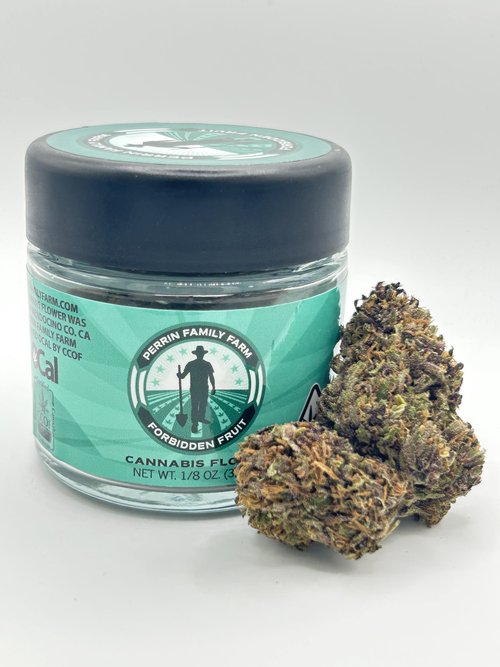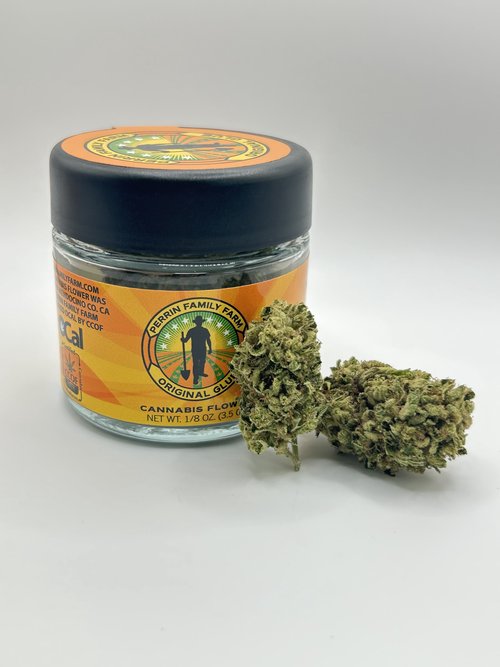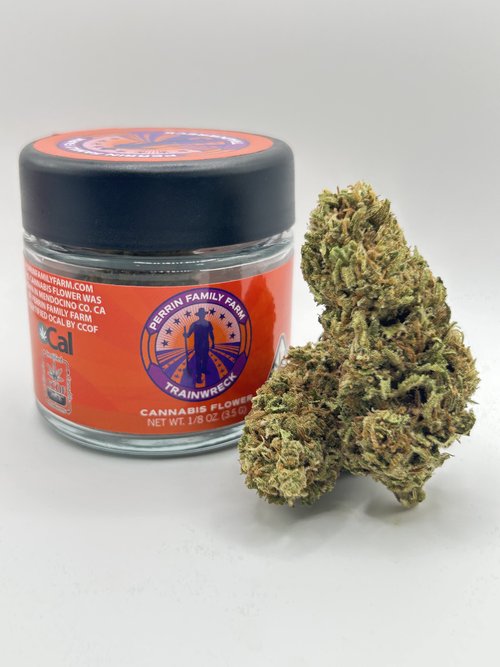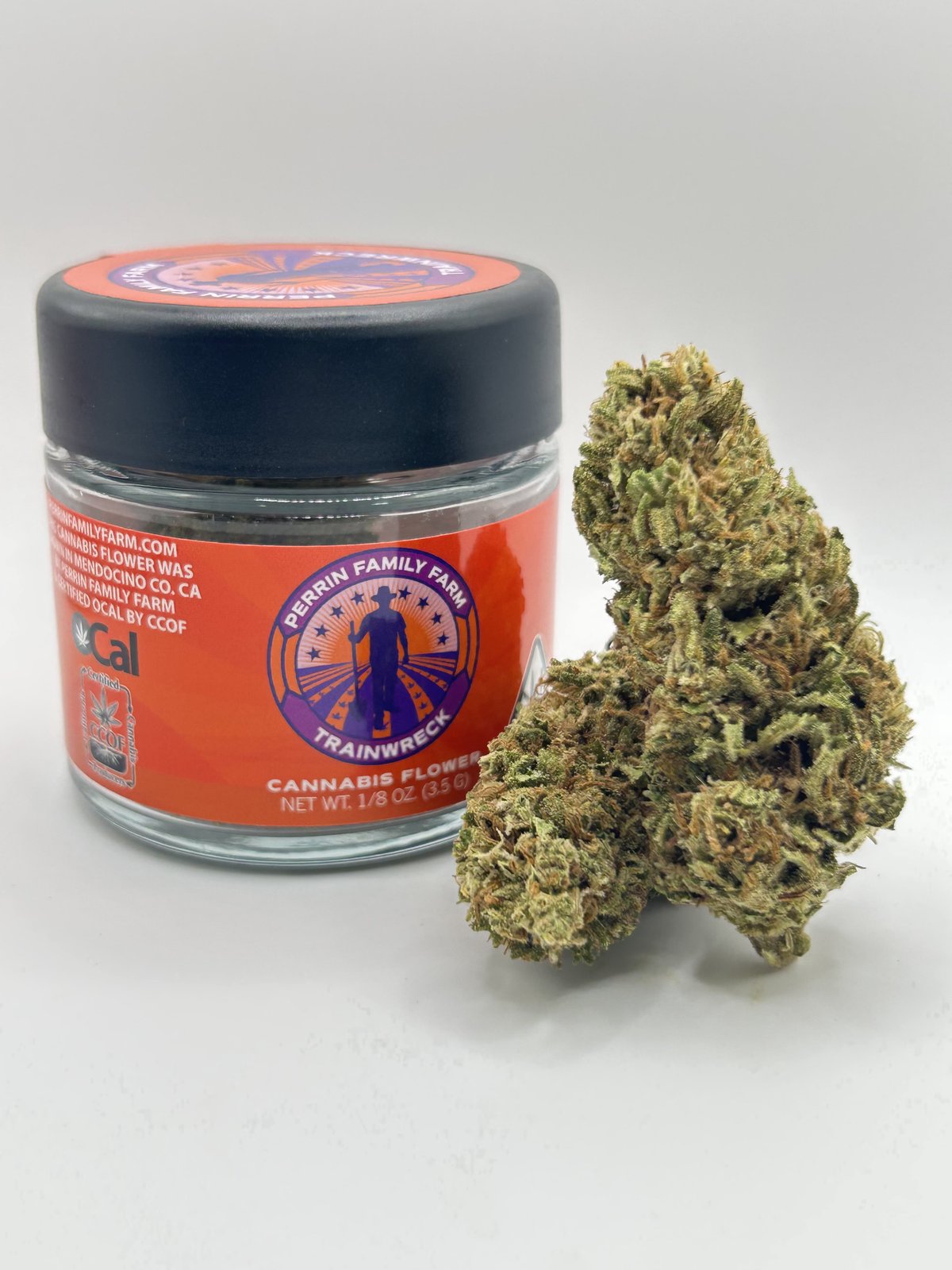
Trainwreck 3.5g Flower
Product Description
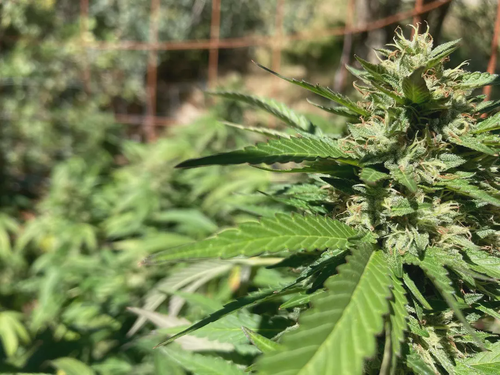
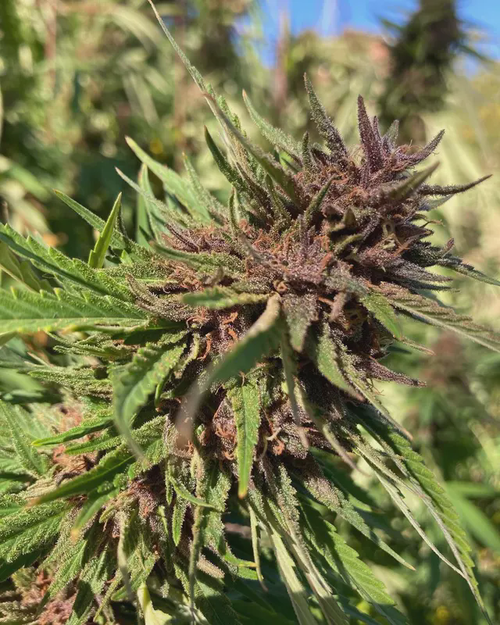
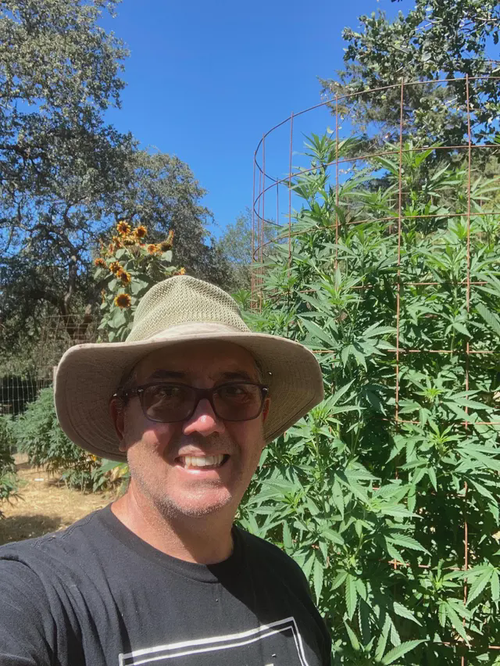
At Perrin Family Farm, our Trainwreck reflects decades of personal experience with cannabis cultivation, brought together under our family farm in Mendocino County. Grown outdoors on our south-facing hillside above the Ukiah Valley, this classic sativa-dominant strain thrives under full sun, fresh air, and careful hands-on farming. Trainwreck is known for its sharp pine aroma, bright citrus notes, and spicy finish, delivering an uplifting, energizing effect that’s well suited for daytime use and creative focus. We grow our flower slowly and naturally, allowing each plant to reach full maturity so its terpene profile and potency are fully expressed.Product Batches
0196 THC: 21.2% CBD: 0.07% Terpenes: 0% Lab Test Date: Dec 13, 2025 Testing Lab: C8-0000013-LIC
About Perrin Family Farm
At Perrin Family Farm, located near Ukiah in Mendocino County, we specialize in cultivating sustainable, sun-grown cannabis. Since 2016, we’ve been dedicated to organic and regenerative farming practices, earning certification under California’s OCal program. Our focus is on producing high-quality strains like Forbidden Fruit while staying true to our values of small-scale, environmentally conscious farming.Wholesale Inquiry
Are you a licensed cannabis business with a California Cannabis License issued by the Department of Cannabis Control (DCC)? Sign up for Higher Origins for free to explore products from Perrin Family Farm.Frequently Asked Questions
Here’s a list of commonly asked questions. Click each to reveal the answer.
Q: Where is "Mendocino County" and what is it known for?
Mendocino County is located on the north west coast of California, known for its rugged coastline, wineries, and redwood forests. The county is home to inland towns such as Willits (where Higher Origins was created!) and Ukiah, as well as coastal towns like Fort Bragg and the popular tourist village Mendocino. As one of the three counties in the fabled "Emerald Triangle", the county has a long history of cannabis cultivation, dating back to the 1960s when it became a hub for the counterculture movement. During this time, many young people moved to the area to grow and sell cannabis, drawn by the region's favorable climate and abundant natural resources. Medical legalization, the decline of the logging industry, and recreational legalization completely changed the landscape of the Mendocino county cannabis industry. Today, the county is now one of the largest centers of cultivation in the state, and the county with the highest percentage of small farms. Unfortunately, poor management of the licensing and permitting process by county officials has created an obstacle for easy expansion of legal cannabis businesses in the county.